
Data Logger: Never Miss a Message
In flood monitoring and environmental sensing, data continuity isn't just a convenience — it's critical. A gap in the record at the wrong moment can mean a missed warning, an incomplete picture of a flood event, or a faulty analysis. That's where the datalogger function of Green Stream’s Corbo transceiver becomes indispensable.
What Happens When You Lose Connectivity?
Cellular and satellite networks aren't perfect. Towers go down, weather interferes, power outages interrupt service. For a remotely deployed water level sensor, any of these events could mean minutes — or hours — of missing data.
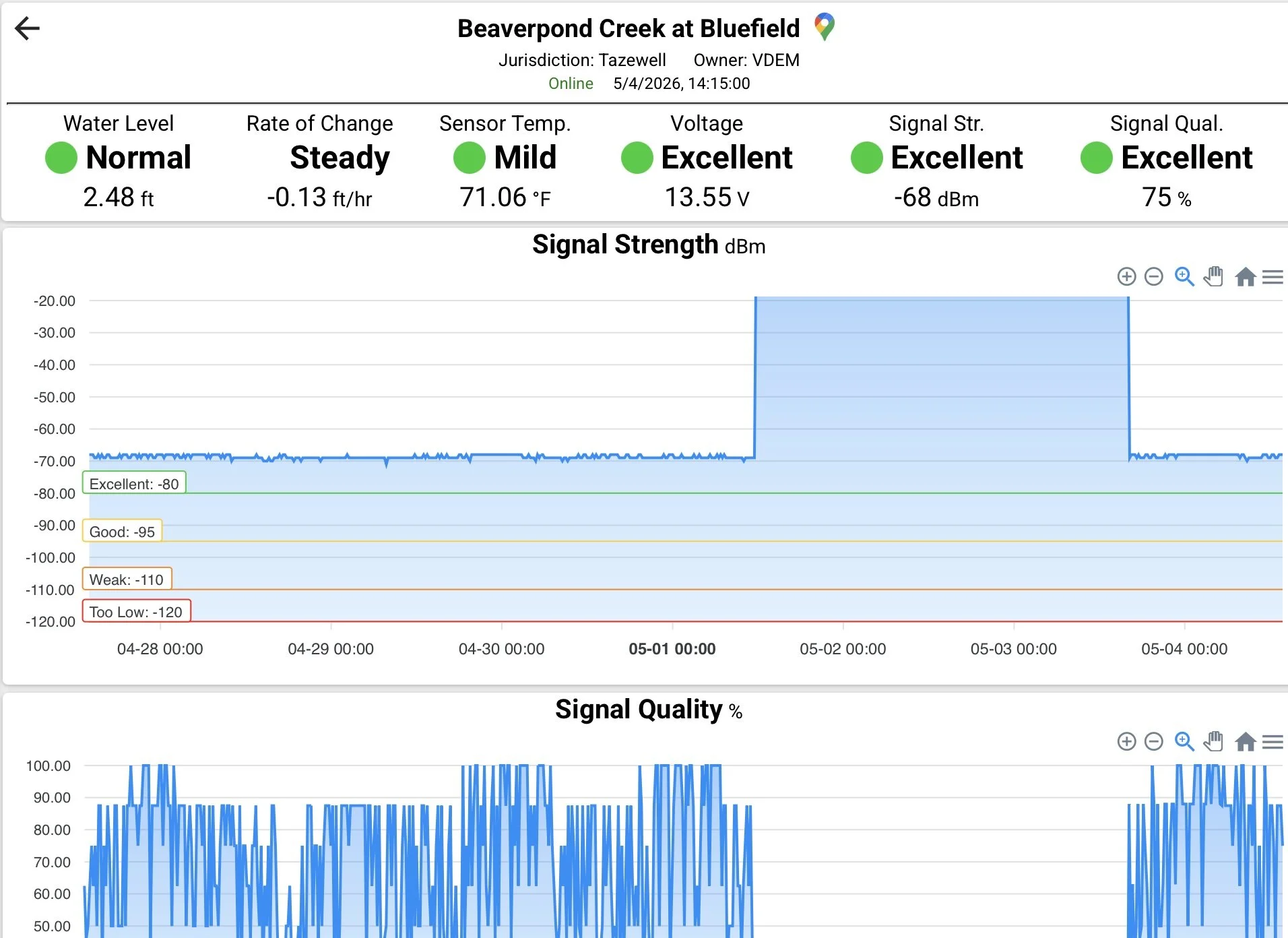
Look at the graph from a recent outage at one of our rural sites in the Blue Ridge mountains. The graph unmistakably shows a cell service disruption May 1 to May 3, before it was finally restored. During that window, a naive system would simply produce a gap in the record. No readings. No timestamps. No way to reconstruct what the creek was doing.
The Datalogger Difference
A transceiver equipped with datalogger functionality handles this scenario differently. Rather than waiting passively for connectivity to return, it keeps working. On its regular measurement schedule, it takes a reading and writes it to local storage. The timestamps are preserved. The values are preserved. Nothing is lost.
When the cellular link is restored, the transceiver doesn't simply resume normal reporting and move on. Instead, it transmits the entire backlog of stored records to the server in sequence, filling in the gap as if the connection had never been interrupted.
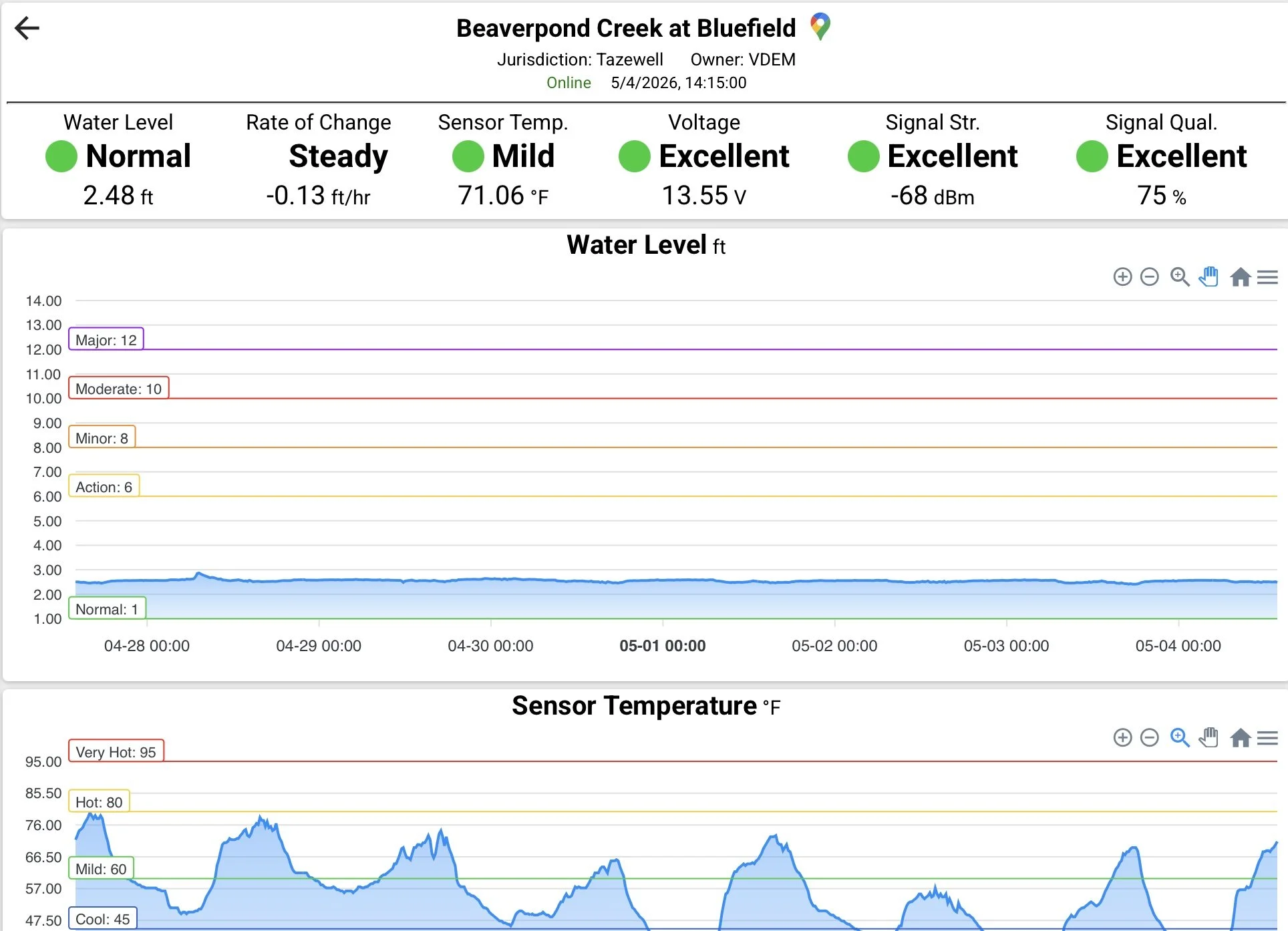
The Water Level graph for the same monitoring site in the same period tells the story clearly. Even with the dropped signal, the water level trace at Beaverpond Creek is continuous and unbroken. There is no gap. No flat line. No missing segment that would leave an analyst guessing what the creek did during the connectivity event.
That seamless record exists because the transceiver never stopped doing its job. It measured, it stored, and when the network came back, it reported — in order, on time, and complete.
Why It Matters
For water resources managers, emergency managers, and infrastructure operators, a complete dataset is the foundation of good decisions. Flood thresholds, model inputs, and post-event analysis all depend on having a reliable record. The datalogger capability means that a bad day for cell towers doesn't have to be a bad day for your data.
With the right hardware in the field, a connectivity gap becomes nothing more than a footnote on the signal strength chart — not a hole in your record.