The Green Stream team is always excited to help a community keep its residents safer through real-time flood monitoring. But it’s even more exciting when it’s our own community!
This week, we installed three water level sensors along Smith Creek for the Town of Wake Forest’s new StreamWatchproject. Led by the Town’s engineering team, the project supports Wake Forest’s strategic plan—and shows how communities can make each investment in flood monitoring count.
1. Start small and build over time.
A flood monitoring network doesn’t have to be built all at once. Wake Forest started with a precipitation gauge and a weather station. When funding became available, the Town added its first three stream gauges at key locations along Smith Creek. The plan is to expand the network over several years, learning along the way and putting available funds to work where they’re needed most.
2. Make the data work for more people.
Flood and weather data becomes more valuable when it’s shared. Wake Forest’s stream gauge readings feed into FIMAN, North Carolina’s Flood Inundation Mapping and Alert Network. Sharing those readings gives state emergency management teams a clearer picture of local conditions and can help communities downstream understand what’s happening upstream.
Residents can also subscribe to water level alerts through FIMAN, helping them make informed decisions during severe storms.
We’re proud to support the people working to keep Wake Forest safe—and grateful to call this community home.
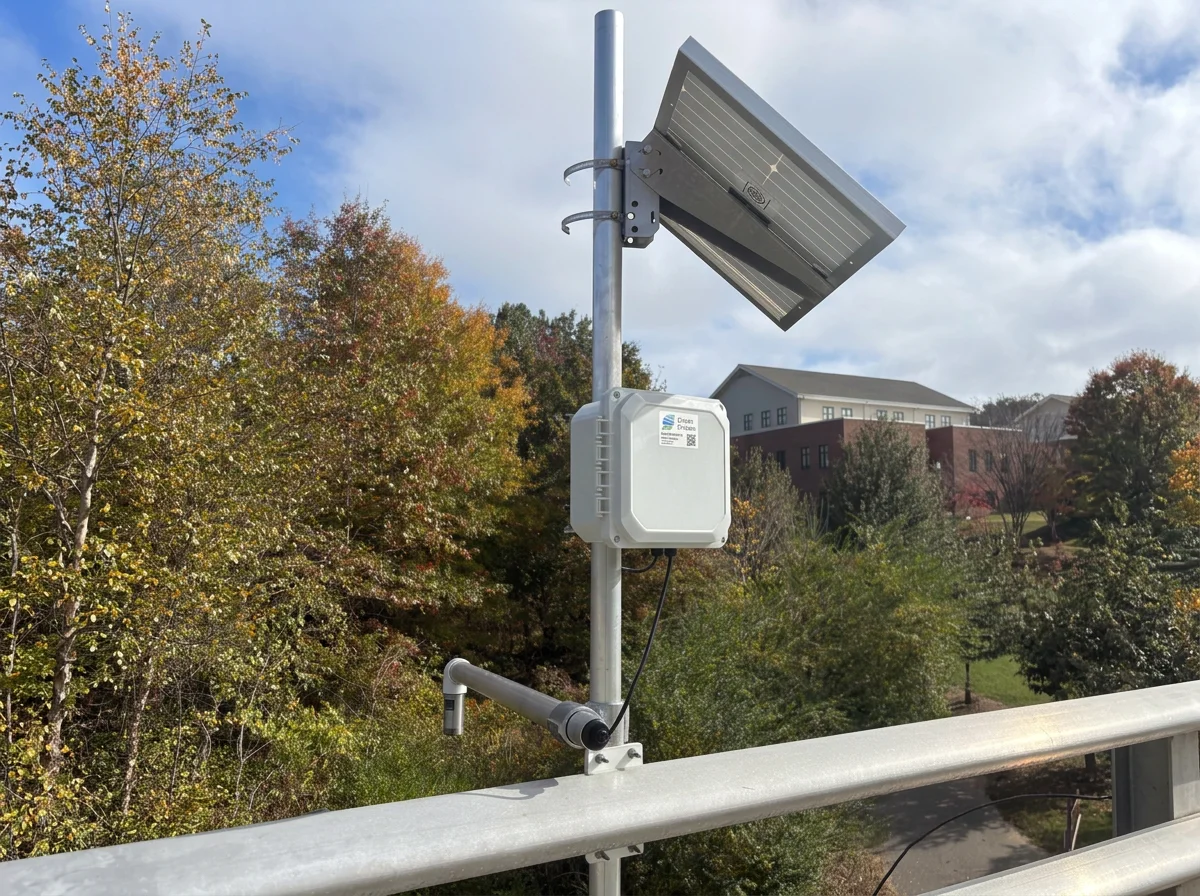
A stream gauge monitors water levels on Smith Creek and reports data in real time to emergency management and public works.